
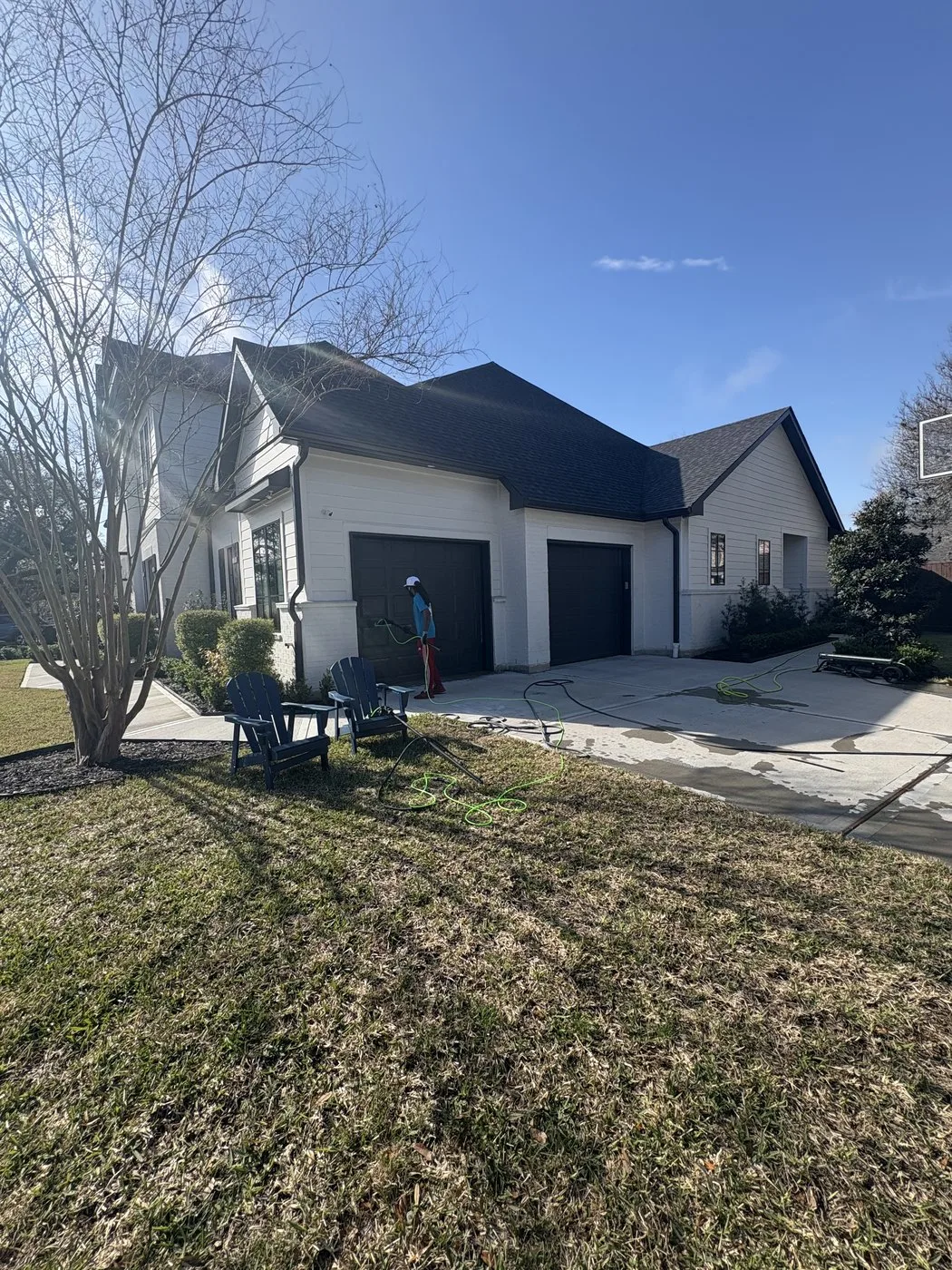
A Memorial exterior cleaning list comes down to five surfaces (roof, gutters, windows, walls, and concrete) cleaned in that order, top of the house to the ground. What sets Memorial apart is why the list exists at all: the Memorial area and the Memorial Villages sit under one of the heaviest tree canopies in Houston, with mature pines and oaks shading large lots. Shade is the through-line for everything below. Surfaces that stay damp grow things, and under a canopy this thick, most surfaces stay damp.
What the canopy does to a house
Pine needles do not blow off a roof the way loose leaves do. They slide into gutters and mat down into a dense layer that holds water, which is why gutters clog fast on tree-heavy Houston homes even between obvious leaf drops. Pollen and organic film settle on shaded glass and siding and stay put, because the morning damp under the trees never fully burns off. Algae takes hold on brick and walkways that rarely see direct sun. And roof sections under overhanging branches streak sooner than open slopes, since the shade keeps shingles moist long enough for growth to establish.
A house in full sun sheds much of this on its own. A shaded Memorial lot does not, which is why the maintenance list here runs longer than it would for the same house on an open lot.
The checklist, roofline to ground
Work top-down. Cleaning a roof or clearing gutters sends debris and dirty runoff over everything beneath, so any surface cleaned out of order just gets dirtied again. Start at the top and finish at the pavement:
- Roof: Look for dark streaks and green patches, especially on slopes under overhanging branches. Streaking is a cleaning problem before it is a shingle problem, and the right wash removes the growth without pressure.
- Gutters: Clear matted pine needles and check that downspouts actually drain. Under heavy canopy, gutters can fill again within a single season.
- Windows, frames, and sills: Clean the glass, then the frames and sills where pollen film and cobwebs collect. Shaded panes haze faster than sunny ones even when they look fine from inside.
- Siding and brick: Wash off the green tint and organic film, paying attention to north-facing and tree-shaded walls where algae starts first.
- Driveway and walkways: Finish with the concrete, lifting algae, leaf stains, and tannin marks. Shaded walkways can also get slick, which makes this a safety item as much as an appearance item.
Windows show the shade first
Glass is usually where a shaded lot gives itself away. Film that would rinse off in full sun clings to damp, tree-covered panes, and the haze becomes obvious the moment light angles across the glass. A professional exterior window cleaning covers frames, sills, and screens along with the glass, which matters here because the film builds on all of it, not just the panes.
Match the method to the surface
Not everything on the list takes the same treatment. Brick, siding, and roofs need low-pressure cleaning with the right solutions, while driveways and walkways can handle direct pressure. The difference between the two (and why it matters for older Memorial brick in particular) is covered in soft washing vs pressure washing. The short version: pressure belongs on concrete, chemistry belongs on walls and roofs.
A rhythm that fits the trees
Under this much canopy, once a year is rarely enough for gutters or glass, while roofs and driveways can run on longer cycles. Rather than tracking five separate schedules, a recurring maintenance plan sequences the work so the shaded surfaces get attention before growth takes hold, and the top-down order takes care of itself.