
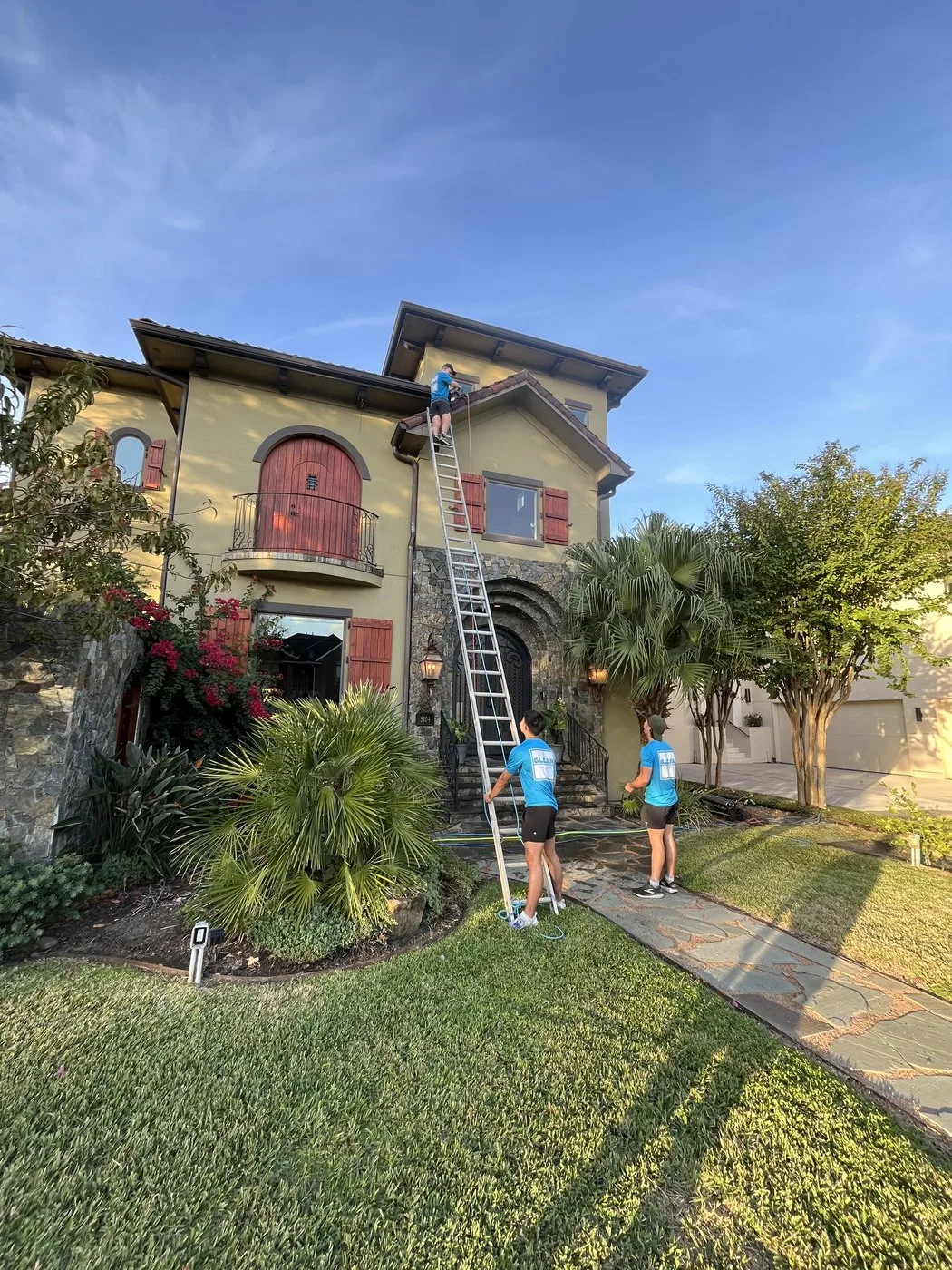
Most Houston homes do best with exterior window cleaning two to four times per year. Twice a year is a sensible baseline. Quarterly is the better rhythm for homes under heavy trees, near busy roads or active construction, or with sprinklers that reach the glass.
The right schedule depends less on the calendar and more on how quickly buildup becomes noticeable. A home can look fine from across the yard but show haze, spots, or streaks the moment sunlight angles across the glass. For what a professional visit includes, see Gleam Clean’s exterior window cleaning page.
How often should you schedule cleaning?
For many homes, twice a year keeps exterior glass from ever looking neglected. Plan around Houston’s two messiest stretches: once after spring pollen tapers off, and once after the worst of hurricane-season storms.
Move to a quarterly schedule if any of these apply: shade trees hang over the house, sprinklers hit the glass, the street carries steady traffic, or there is construction nearby. Each one shortens the time it takes windows to look dull again. If you would rather not track it yourself, a recurring maintenance plan keeps the schedule handled for you.
What makes Houston glass dirty faster
Houston’s pollen season is long and heavy. Live oaks alone can coat glass, sills, and screens in yellow-green film from roughly February through April, and dry stretches let dust and pollen keep settling well past spring.
Storms are the other recurring reset. Hurricane season runs June through November, and even ordinary summer thunderstorms rinse dirt down from screens, frames, brick, and roofline edges, leaving glass cloudy days after it was cleaned. Gulf humidity adds to the problem on shaded sides of the house, where damp glass and frames hold onto organic debris. If the siding or brick around the windows is also dingy, house washing may help the whole wall look cleaner, not just the glass.
Sprinklers deserve their own mention. If spray reaches a window, minerals dry into white spots that become harder to remove the longer they sit. Nearby construction, lawn work, and pressure washing on adjacent surfaces also kick up dust and overspray that can put windows ahead of schedule.
When dirty windows are most visible
Window dirt is easiest to see when light angles across the glass. Morning sun, late-afternoon sun, and bright interior light at night reveal haze that is invisible in flat midday light.
Large front windows, patio doors, breakfast areas, and glass near pools or outdoor seating usually show buildup first because people look through them every day. Upper windows are less noticeable from inside, but cobwebs, pollen, and dirty frames still affect how the home looks from the curb.
Signs your windows are ready now
Watch for hazy glass at sunrise, white sprinkler spots, dirty frames and sills, spiderwebs around upper windows, or glass that still looks cloudy after rain. Those are better cues than counting months.
One caveat: if the glass has older hard water stains or etching, routine cleaning may improve the appearance but not fully restore the surface. Buildup sitting on top of the glass and mineral damage worked into the glass are different problems, and it is worth knowing which one you are dealing with before setting expectations.
Times when clean windows matter more
Some dates justify cleaning ahead of schedule: hosting, holidays, family visits, listing photos, open houses, and outdoor parties all put your glass in front of people who notice. The same goes for messy weather. If a storm has pushed debris across the windows or pollen has left a yellow film on the sills, waiting for the next routine date just leaves the home looking dull longer than it needs to.
The simplest rule: watch the windows that get the most light and attention. When those start showing haze, spots, or dirty edges, the rest of the house is usually ready too.