
For a Houston driveway in reasonable shape, sealing right after pressure washing is usually worth it, because the timing does half the work. Sealer bonds to clean concrete, and the days after a wash are the one stretch when the surface is free of the dirt, algae, and oils that stop sealer from sticking. Whether it pays off on your particular slab depends on its condition and exposure, which is what a driveway sealing assessment is for.
Sealing does not make concrete look dramatically different the way cleaning does. Its job is to slow down everything Houston throws at the slab afterward, so the results of the wash last longer than one season.
Why the window after pressure washing matters
Pressure washing resets the surface: dirt, algae, mildew, and most surface stains come off, and the pores of the concrete open back up. That is exactly the surface sealer needs. Applied over grime, sealer traps it and peels early; applied over clean concrete, it can cure into the surface the way it is designed to.
The one requirement is dryness. Concrete typically needs 24 to 48 hours to dry after washing before sealer goes on, and longer after rain or in heavy humidity. In a Houston July that is the tricky part: afternoon pop-up storms can land in the middle of the drying window and push the job back a day or two. That is a scheduling nuisance, not a reason to skip sealing; it just means the timeline needs a little slack.
What sealing protects a Houston driveway against
Houston is hard on bare concrete in three specific ways. First, constant moisture: in Gulf humidity, algae and mildew regrow faster on unsealed concrete, especially on shaded sections, so a cleaned driveway starts greening again sooner than it would behind a sealer. Second, stains: concrete is porous, and tire marks, rust, and leaf tannin from live oaks soak in rather than sitting on top. Sealed concrete gives you time to rinse spills off; unsealed concrete drinks them.
Third, movement. Much of Houston sits on expansive clay soil that swells and shrinks with the weather, shifting slabs and opening hairline cracks. Sealer will not stop the soil from moving, but it slows the water intrusion that turns hairline cracks into wider ones.
The water-bead test: is your driveway sealed now?
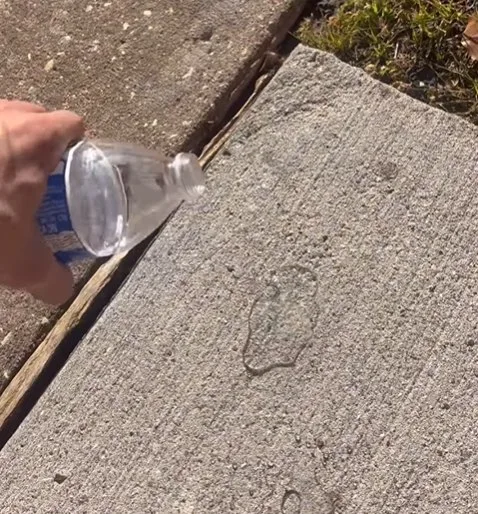
There is a simple way to check what you are working with. Pour a little water on the driveway. On a sealed surface, the water beads up and sits on top. If it soaks straight in and darkens the concrete, the sealer has worn off, or was never applied. Run the test on a few spots, since sun-baked and high-traffic areas lose their sealer first while shaded edges may still bead.
How long driveway sealers typically last
Acrylic-type topical sealers commonly last one to three years before they wear thin, while penetrating sealers generally last longer because they soak into the concrete instead of forming a film on top. Those are typical ranges, not promises. Full sun, daily traffic, and sprinkler overspray all shorten the life of any sealer. The water-bead test is the practical way to know when a driveway is due again, and a recurring maintenance plan can keep the wash-and-check cycle on schedule so it never depends on memory.
When sealing is not worth it
Sealer protects sound concrete; it does not fix damaged concrete. A driveway with wide cracks, spalling, or flaking at the surface needs repair before sealing, because sealer over failing concrete locks in the problem and wastes the money. And a slab that is near the end of its life (heaving, crumbling, or already scheduled for replacement) will not be saved by a coat of sealer. In those cases the right call is a repair quote first, and sealing later on the surface that is actually worth protecting.