
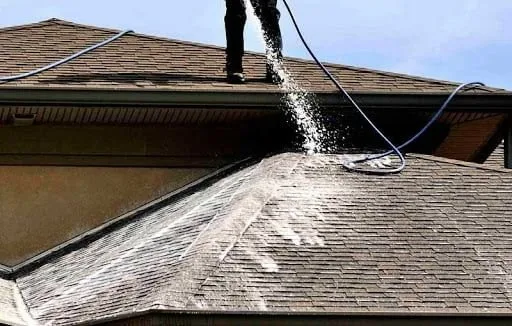
The black streaks on your roof are algae, specifically Gloeocapsa magma, an airborne blue-green algae that feeds on the limestone filler in asphalt shingles. It thrives in Gulf Coast humidity, which is why the streaks are so common in Houston and why they get darker through the warm months instead of fading.
The growth usually shows first on north-facing and shaded slopes, the sections of the roof that stay damp longest after rain or morning dew. Removing it is exactly what low-pressure roof washing is built for. Here is what the algae is doing up there and why the fix matters.
What is Gloeocapsa magma?
Gloeocapsa magma, often called roof algae, travels as airborne spores. When those spores land on an asphalt roof, they settle in and start feeding on the crushed limestone that manufacturers use as filler in shingles. As the colony grows, it builds a dark outer coating to protect itself from ultraviolet light, and that dark coating is the black streak you see from the driveway. It is not soot, tree sap, or a shingle defect. It is a living colony that expands every humid month.
Houston hands the algae nearly ideal conditions. The warm season stretches across most of the year, hurricane season keeps moisture coming from June through November, and Gulf humidity means shaded shingles rarely dry out completely. A roof in a dry climate can shrug off the same spores. A roof in Houston usually cannot.
Do black streaks damage your roof?
At first, the streaks are cosmetic. A lightly streaked roof still sheds water and holds its granules. The problem is what sustained growth does over time. The colony holds moisture against shingles that would otherwise dry between rains, and moisture is exactly what asphalt shingles exist to shed. Established algae also opens the door for moss and lichen, which attach more aggressively and pry at the shingle surface as they grow. Left alone for years, that combination shortens shingle life, and roof replacement is a far bigger bill than roof cleaning.
Will the streaks spread?
Yes. The colony releases new spores, rain washes growth down-slope, and each warm, humid stretch pushes the streaks wider and darker. Streaks that first appear on a shaded slope in spring are often visibly worse by the end of hurricane season in November. The algae does not care which slope it started on, either; north-facing sections simply show it first because they dry slowest. And the same damp shade that feeds roof algae often feeds green film on siding below it, which is where house washing picks up the job.
Why pressure washing is the wrong fix
A pressure washer strips the protective granules off asphalt shingles right along with the algae, and some shingle manufacturers void warranties over it. The correct method is soft washing: low pressure paired with a cleaning solution that kills the algae and lets it rinse away. The solution does the work, not the pressure.
What a proper cleaning fixes, and what it cannot
A soft wash kills the algae colony and removes the streaks, and on a roof in decent shape the difference is dramatic. One caveat worth knowing up front: cleaning removes the growth, but it does not restore granules already lost to age or to past scrubbing. If shingles are curled, bald, or leaking, that is a conversation for a roofer before it is a conversation about cleaning.
Because the spores are airborne, no cleaning is permanent. In Houston’s climate the algae will eventually land again, so a recurring maintenance plan is the practical way to keep the streaks from re-establishing between cleanings.